From the archive
Rethinking Peacebuilding for a New Geopolitical Era
The liberal peace is dead. Roger Mac Ginty, Richard Gowan, and Erika Gregory on what is replacing it, and how the field navigates the shift.
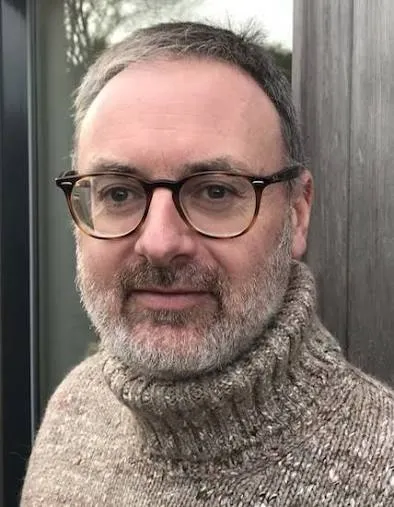
Roger Mac Ginty
Durham University
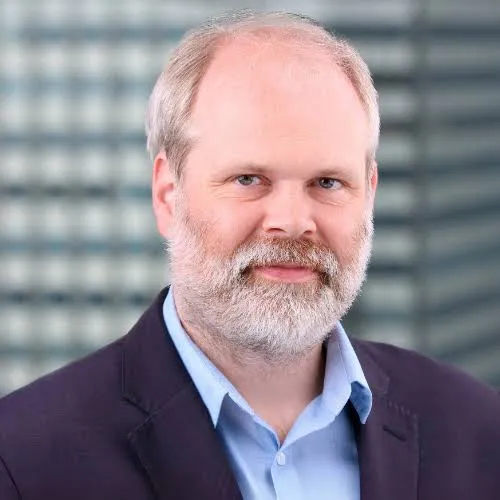
Richard Gowan
International Crisis Group
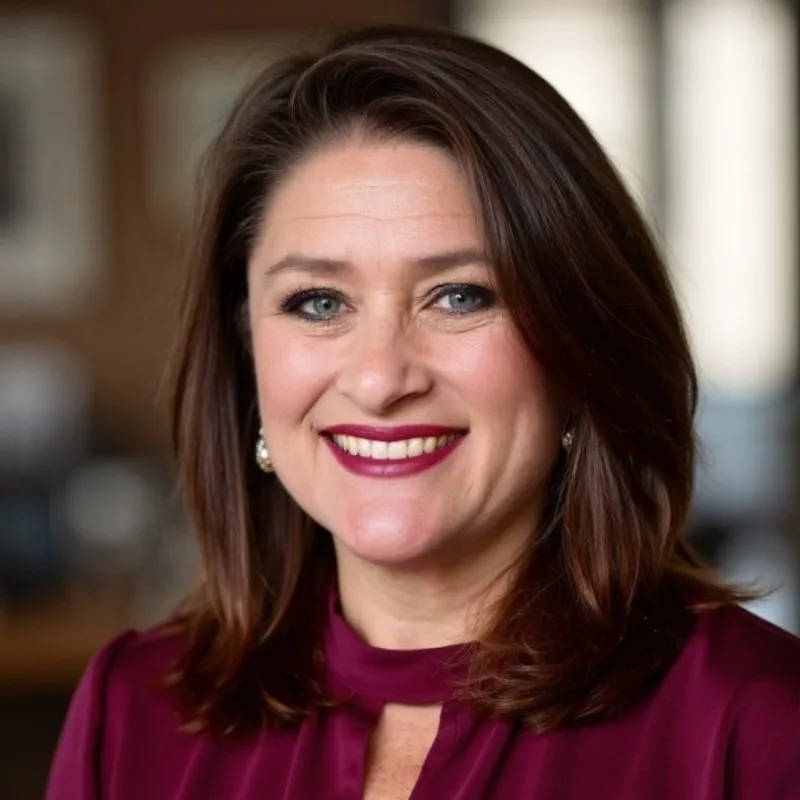
Erika Gregory
Horizon 2045
Notes from the conversation
The three opening statements converged faster than a panel usually does. Roger Mac Ginty argued that the peace infrastructure built over the past thirty years is creaking and underfunded but still standing, and that what has actually changed is who is willing to use it. Western actors who once led the liberal peace have vacated the space, pouring resources into defence and talking about security where they used to talk about peace. Into that gap have come middle powers with access, appetite and, in his word, optimism.
Richard Gowan reached a similar diagnosis by a different route. Qatar, Turkey and the Gulf states are displacing the institutions built up after the Cold War, and the Security Council is too deadlocked to compete. His tentative conclusion was that those institutions keep certain narrow comparative advantages, humanitarian coordination and peacekeeping among them, and that the honest question is what they are for in a world that no longer routes everything through them.
Erika Gregory took the conversation somewhere less institutional. Her argument was that the post-1945 order could not have anticipated the way today’s security risks entangle. She offered Camp Century, the nuclear-powered base the US Army abandoned beneath Greenland’s ice in 1967 on the assumption that snowfall would bury the diesel and radioactive coolant forever, and the 2016 anthrax outbreak on Russia’s Yamal Peninsula, where thawing permafrost released spores from a decades-old reindeer carcass. Each began as one kind of problem and became four at once.
The disagreements were sharper than the diagnoses. Gowan pressed Mac Ginty on whether the 1990s deserve their nostalgia, given Srebrenica and Rwanda, and got back a mixed report card that kept the decade’s legal innovation while conceding that some interventions amounted to democracy at gunpoint. On whether a world of short-term ceasefires can add up to peace, Mac Ginty declined to force the question, asking instead what it is about us that insists on imposing coherence on a peace space that may no longer have any. Gowan’s answer on entanglement was that ad hoc coalitions can do real work, the Black Sea Grain Initiative being his example, but that genuinely global problems still need institutional responses nobody is currently willing to fund.
The most pointed intervention came from the floor. Julia Pickhardt, who led the Yemen file at CMI, observed that the long search for a technical formula in mediation has functioned as a way of avoiding the political question of whose norms get applied. The mediators we call new, she noted, are only newly recognised by us: Sulh in the Islamic tradition predates the UN Charter by centuries. Wail Abdullah Hashem, drawing on sixteen years of humanitarian access negotiation in Yemen, made the practical case, describing six months spent opening a route to 75,000 people in Al-Durayhimi and Al-Tuhayta, and arguing that fragmentation sometimes creates openings rather than only obstacles.
Responding to both, Gowan offered the line most people will take away. We tell these stories from the mediator’s point of view, he said, which is rather like going to a wedding and finding the priest interesting. People marry because their interests align. The priest is there in a functional role.
What is it about us that wants to put coherence onto everything, when there mightn't actually be coherence?
Roger Mac Ginty
In this conversation
Opening statements
- 0:00Welcome: EPI and the Global Peace Almanac
- 1:30Event overview and format
- 3:51Roger Mac Ginty: "Liberal Peace Is Dead. What's Replacing It?"
- 6:33Richard Gowan: New peacemakers and old institutions
- 9:38Erika Gregory: Entangled security risks (lessons from the Arctic)
The panel in conversation
- 13:23Were the 1990s really a golden age of peacekeeping?
- 17:20Middle power mediators: new style or new attitude?
- 20:26What is peace now? Ceasefires vs. sustainable peace
- 22:23Can ad hoc mediators handle the polycrisis?
- 26:15Institutions and mediators in tandem: the Black Sea Grain Initiative
- 29:18Should UN peace operations be stripped down?
- 33:09Horizontal vs. state-led security
- 35:03Audience exercise: home, trust, security
- 38:44Advice for today's leaders: foresight scenarios for 2035
- 42:43Legal innovation as conflict prevention (Wales Future Generations Act)
- 46:04Peace vs. justice: when does pragmatism cost us principles?
- 48:57Guterres and peacemaking as the "entry price"
- 51:08The leadership vision gap and entanglement as strength
Guest perspectives
- 53:22Bringing in guest perspectives
- 56:02Julia Pickhardt: Whose peace are we building?
- 59:25Yemen: shifting mediators and the agency of conflict parties
- 1:02:43Wail Abdullah Hashem: Humanitarian access in Yemen
- 1:05:03Lessons from Hodeidah and the 2022 truce
- 1:10:14Panel response: it's the parties, not the mediator
Audience questions
- 1:12:29Q&A: Do new mediators redistribute power or just shift it?
- 1:14:31Don't underestimate stability
- 1:17:39Peacebuilding as a design problem: foresight and philanthropy
- 1:21:03Q&A: Are institutions agile enough? The HDP nexus
- 1:22:41Political will, AI governance, and the humanitarian burden
- 1:26:02The acceleration of everything
- 1:27:42Positive deviance: UNDP Accelerator Labs and UN Charter reform
Closing
The panel and their essays
Roger Mac Ginty
Professor, Durham Global Security Institute, Durham University
Roger Mac Ginty is Professor at the Durham Global Security Institute and the School of Government and International Affairs, both at Durham University. He is founding editor (with Oliver Richmond) of the journal Peacebuilding, and founder (with Pamina Firchow) of the Everyday Peace Indicators.
Richard Gowan
Director of Global Issues and Institutions, International Crisis Group
Richard Gowan is Director of Global Issues and Institutions at the International Crisis Group. From 2019 to 2025 he was Crisis Group’s UN Director. He has also worked at New York University’s Center on International Cooperation and the European Council on Foreign Relations.
Erika Gregory
Founder and President, Horizon 2045
Erika Gregory is Founder and President of Horizon 2045, working at the intersection of global security, philanthropy, and governance reform. She is also Co-Lead of Women Transforming Global Security (WTGS), a partnership with Ploughshares and The Elders.
About this event
Today’s geopolitical shifts have transformed how peacemaking and peacebuilding are conducted, and who is leading the charge. Navigating that change requires a new outlook.
The Effective Peacebuilding Initiative and The Less War Initiative convene Roger Mac Ginty, Richard Gowan, and Erika Gregory for a big-picture conversation on new approaches to the complexity of today’s conflicts. Drawing on their work at Everyday Peace Indicators, the International Crisis Group, and Horizon 2045, the panel takes up the peace and security sector’s geopolitical backdrop and three pressing questions:
- How can peace and security leaders adapt to a system that no longer rests on the aspirations of democratic statemaking and multilateral agreements as a means to peace?
- What can we learn from the middle-power mediators carrying influence in today’s conflicts?
- Where are reorientation and coordination needed across the sector to reduce violent conflict and strengthen peace?
Each panelist writes in Volume I of the Global Peace Almanac, and the conversation expands on their essays. Reading them beforehand is not required, but it will sharpen the discussion.