From the archive
What Local Ownership Requires of Non-Locals
Libby Hoffman and John Caulker on what they’ve learned from nearly two decades of partnership in Sierra Leone about transformative partnerships between locals and non-locals.
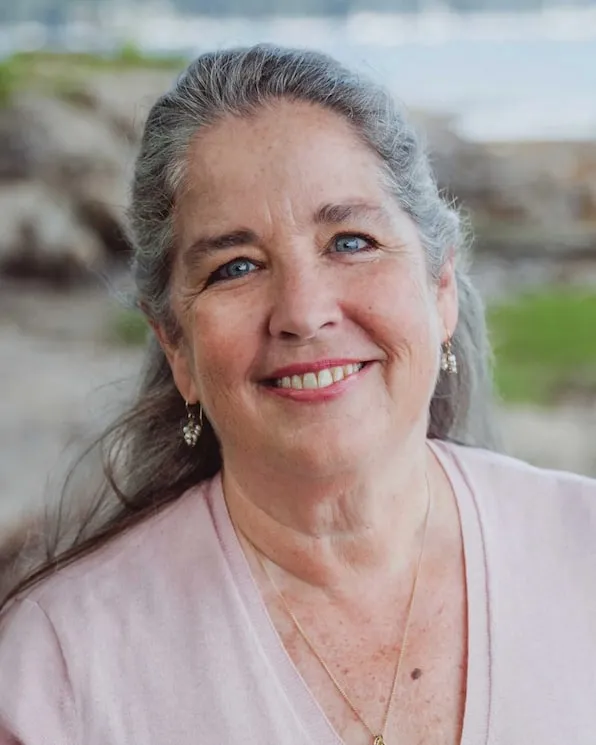
Libby Hoffman
Catalyst for Peace
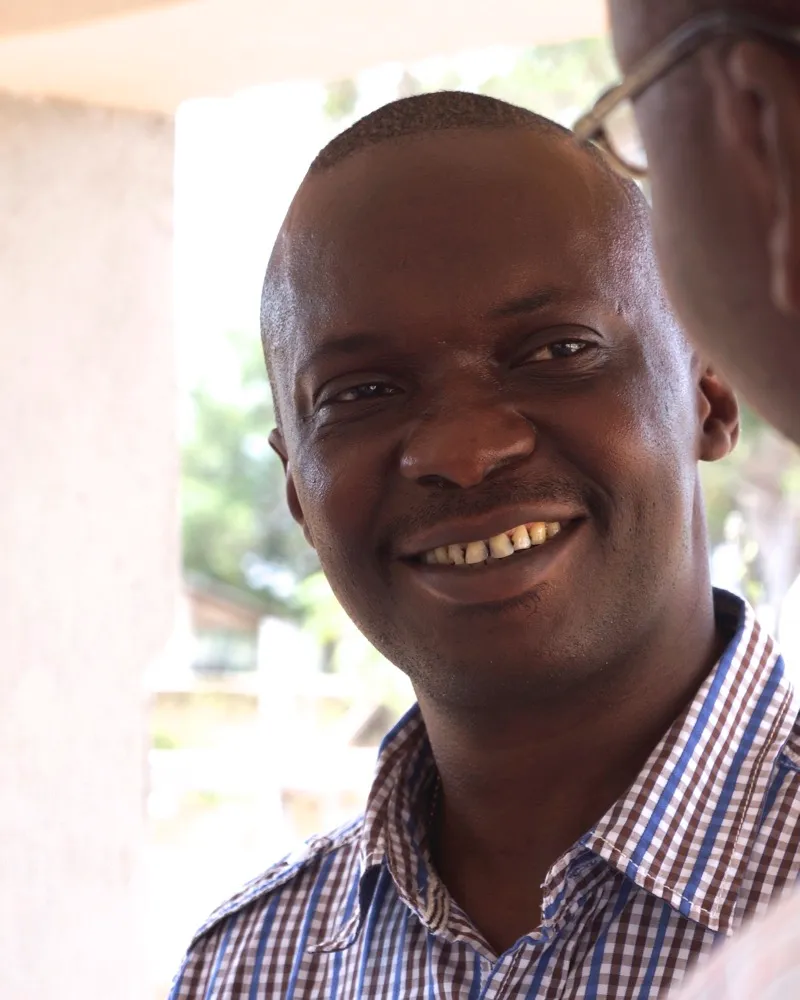
John Caulker
Fambul Tok
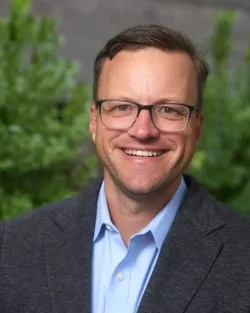
Jesse Eaves
Humanity United
Notes from the conversation
John Caulker spent Sierra Leone’s civil war documenting atrocities as a human rights advocate, and he watched the formal machinery of transitional justice arrive afterwards and stop short of the villages. The Truth and Reconciliation Commission had two years and worked largely through town hall hearings. The Special Court reached about ten defendants. When he met Libby Hoffman in 2007, she asked for a one-year concept note. He offered three months instead, enough to go and ask communities what they wanted. In Kailahun a woman told his team that no one had ever asked them whether they wanted to reconcile. They did, she said, and through their own tradition.
Libby offered the metaphor that has organised the partnership ever since. The aid system tends to act like a bottle of water poured into a community whose bowl is cracked: the water runs straight through, and the usual response is to pour more. The bowl itself stays invisible, and so does the work of repairing it. Fambul Tok’s consultations, local reconciliation committees and values guidelines (including weighted representation for women) were that repair. Once the bowl held, she said, communities became something closer to a well, drawing on reserves of their own. Each level of the partnership was a bowl nested inside the next: the village, the chiefdom and district, Fambul Tok nationally, and Catalyst for Peace holding the international container through long-term funding.
John’s account of how trust gets built was strikingly granular. Staff declined the best chair when villagers offered it. They asked chiefs to consult before fixing a bonfire date, and to let children stay and listen, since children had suffered in the war too. They held meetings in the communities, however bad the road, rather than summoning leaders to town. That trust turned out to matter well beyond reconciliation. When Ebola reached Kailahun, Fambul Tok convened the district’s first community meeting on the outbreak, and the relationships it had built helped establish female burial teams that changed how families handled their dead. Peace Mothers groups who had been making soap as a market initiative turned to prevention education. Libby called the result social immunity: capacity built for one crisis that answers the next.
The two are now carrying that experience beyond Sierra Leone. Catalyst for Peace was founded in 2003 with a $20 million endowment that Libby chose to spend down over a generation, and it was fully spent last year. Fambul Tok, in John’s count, reached more than 2,500 villages across six districts, with most of the money going on vehicles and fuel. With Kenyan peacebuilder Tecla Wanjala and others, they are building the Heart of Africa Platform for Inside-Out Peace and Development. John’s case for it was that post-war Africa keeps receiving the same prescription, a truth commission and prosecutions, and that traditional processes deserve complementarity with those mechanisms instead of a junior role. In Sierra Leone, he noted, there is no bad bush to throw away a bad child.
The questions pressed on the tension between emergence and structure. Asked how much structure an organic process needs, Libby said the tension never goes away and has to stay in the open. Her own example was insisting, six months in, that John step away from the work to reflect when he badly wanted to keep moving. That retreat produced the documented process that later made budgeting and expansion possible. An outsider’s job, she argued, is often to hold space against unhelpful outside influence, which long-term money makes possible. Josephus defended the Special Court’s legacy in international jurisprudence, and John agreed that showing African heads of state they are not above the law was a real achievement. His regret was a different one: Fambul Tok should have partnered with government earlier, in time to shape laws like the 2009 Chieftaincy Act.
Jesse Eaves, answering a question about why global funding systems still favour institutions, described the question he now puts to other donors. Do you want to have an impact, or do you want to pretend to have an impact?
We went to communities with questions, trusting that through facilitated conversation the answers will emerge.
John Caulker
In this conversation
Welcome and framing
- 0:00Welcome and the Global Peace Almanac series
- 3:20Introducing moderator Jesse Eaves
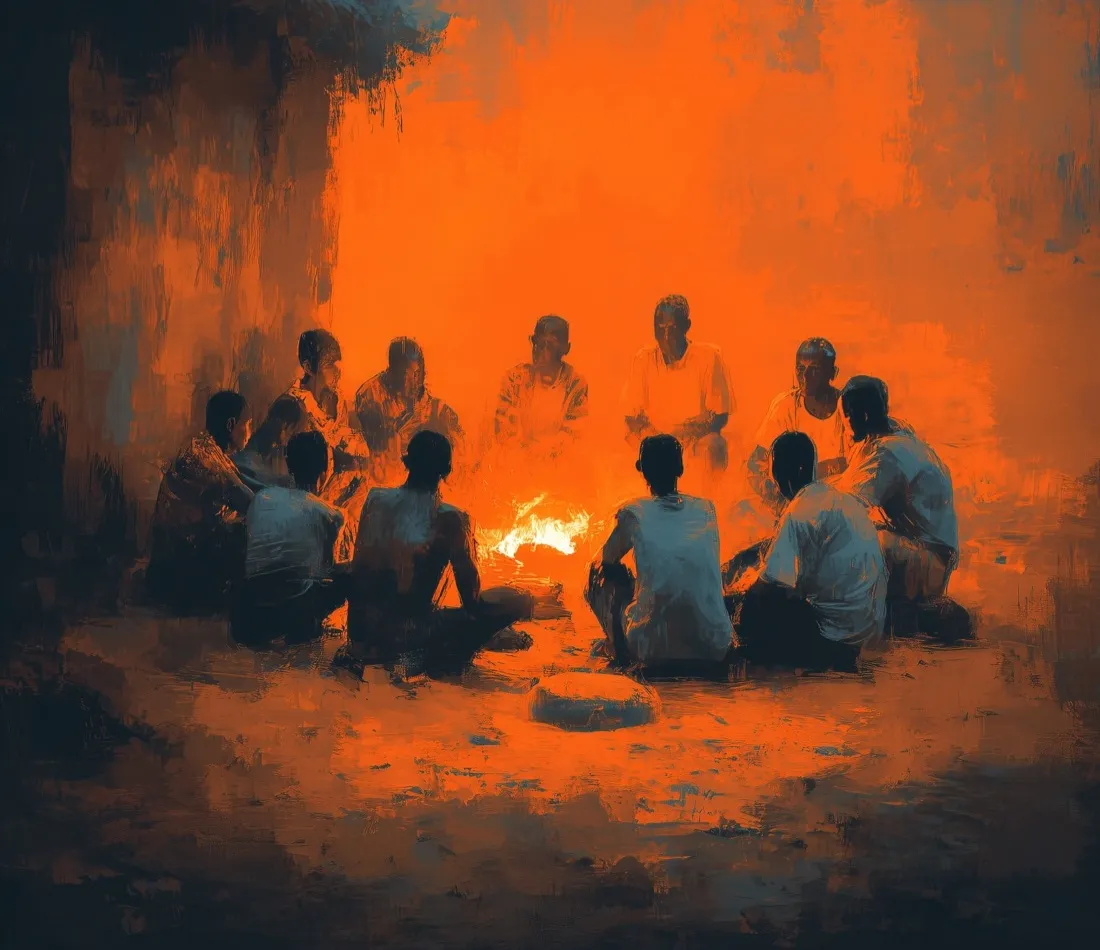
- 4:44A forgiveness bonfire in Sierra Leone
- 9:03Meet John Caulker and Libby Hoffman
The Fambul Tok story
- 10:07The origins of Fambul Tok
- 16:45Inside-out peace and the nested bowls
- 25:04How each bowl holder supports local leadership
- 28:33Storytelling and emergent design
- 31:21Building trust at the community level
- 35:13Fambul Tok and the Ebola response
- 38:39Peace Mothers and "social immunity"
From Sierra Leone to the continent
- 40:51Process is the product
- 44:10From Sierra Leone to the Heart of Africa Platform
- 50:20Moving beyond prescribed transitional justice
- 54:25Communities preventing electoral violence
- 58:23Cost and scale: $300M for 10 trials vs. Fambul Tok
Audience questions
- 1:02:04Audience Q&A begins
- 1:03:27Q&A: Structure vs. organic emergence (Susan Clark)
- 1:11:53Q&A: How big should the community bowl be? (Rick)
- 1:17:57Q&A: When does a model emerge? (Karuna Center)
- 1:25:56Q&A: Changing global funding systems (Riva)
- 1:29:50Jesse Eaves on funding in "the time of monsters"
- 1:36:05Q&A: What could have been done better? (Josephus)
- 1:39:17John Caulker on partnering with government
Closing
The panel and their essays
Libby Hoffman
Founder and President, Catalyst for Peace
Libby Hoffman is the founder and president of Catalyst for Peace, a co-founder of Fambul Tok in Sierra Leone, and author of the award-winning The Answers Are There: Building Peace from the Inside Out (Blue Chair Press, 2022).
John Caulker
Executive Director and Founder, Fambul Tok
John Caulker is the founder and executive director of Fambul Tok in Sierra Leone and a global consultant on community-centered peace and development. A human rights activist during his country’s civil war, he co-created the fambul tok process with the communities most affected by it.
Jesse Eaves
Moderator, Humanity United
Jesse Eaves is senior director for peacebuilding at Humanity United.
About this event
What is possible when the people and communities most impacted by violence get to lead in building peace? And what does it take to support their leadership systemically, instead of episodically and in isolation?
Libby Hoffman and John Caulker have learned that it requires radically reimagining partnership between locals and non-locals, something they have forged in practice over the last 18 years working together to support healing and social repair in Sierra Leone (and beyond) after civil war.
A human rights activist during Sierra Leone’s civil war, John knew its affected communities intimately, and he understood that international tribunals and truth commissions couldn’t deliver the healing and social repair his country needed. Together with the communities where they worked, John and Libby co-created a new, whole-system approach to peacebuilding, grounded in the rich resources of culture and community already present.
More than 2,500 villages undertook reconciliation ceremonies rooted in the indigenous tradition of fambul tok. That work birthed lasting community engagement structures like Peace Mothers and Community Mediation Committees, which then birthed the People’s Planning Process, a new approach to economic development adopted by the Sierra Leone government.
Now, as their partnership evolves into the Heart of Africa Platform for Inside-Out Peace and Development (HOAP), they offer valuable insight for funders and practitioners seeking to catalyze similar change at a systemic level.
Libby Hoffman writes in Volume I of the Global Peace Almanac, and this conversation expands on her essay. Reading the essay beforehand is not required, but it will sharpen the discussion.